Tampilkan postingan dengan label 21st century learning. Tampilkan semua postingan

Learning Real-World Civics: White House Contacts One of Our Students

Posted by Unknown Jumat, 27 Januari 2012 0 komentar
One of the best ways to teach students to become engaged as a citizen of our country, is to have them try to communicate with those in political office. One of our students did just that. A few months back, a student at our school wrote a letter to the Obama Administration, and in that letter she invited the President to visit our school. This week, she and my school secretary were surprised when we received a phone call from the White House. But allow me to let that student tell what happened:


When President Obama visited our state, the Catawba County Democratic Party Chair said that she would deliver some letters from those of us that wanted to write them. I jumped at the opportunity to have contact with the President of the United States of America. I got my letter in on time. Basically, I told President Obama that he has my support and my family’s support and that the Young Democrats of Catawba County are here for him. After signing my name to the letter, I had another thought. So, I wrote on the back: “P.S. You should visit my school.”

A few weeks later, I received a manila envelope in the mail with the return address of The White House. Inside this mysterious envelope was a letter from Michael McSwain, the Associate Director for Scheduling Correspondence from the Office of Scheduling and Advance, explaining that President Obama has a very busy schedule and cannot come to my school at this time. It said that he values each and every invitation he receives to see the country first hand, but it was with sincere regret that “the President is unable to visit your school at this time.” Also in the manila envelope was a picture of the President, the First Lady, and their two children. It just so happens to be autographed by none other than Barrack and Michelle Obama. Even if it is the electronic autograph, it is the thought that counts.

I hadn’t given it much thought recently until English class on January 25, 2012. Mrs. - - - -,  our school secretary, came into my class out of breath saying something about there being a phone call for me. It was who was on the line that had everyone in shock. It was the White House. More specifically, the President’s scheduling coordinator. He told me that President Obama read my letter and appreciated it. He also told me that it was with sincere regret that he could not visit in the near future. While I was a little disappointed that he would not be coming, I was overcome with joy that the President of the United States of America READ my letter. Not only did he read it, he APPRECIATED it. It is things like these that make the world seem less large. It is things like these that make people feel less small.


All this talk about teaching our students to be 21st century citizens means getting them to engage and understand our government. While our student did not receive a phone call from the President himself,  it is things like these that make our students believe they are heard and valued by those who lead our country. 

Baca Selengkapnya ....

Top 10 Tips for Using Social Media for Administrators & Other Educators

Posted by Unknown Minggu, 01 Januari 2012 0 komentar
According to Andy Beal and Judy Strauss, authors of Radically Transparent: Monitoring and Managing Reputations Online, “Shifting from traditional to social media requires new skills, new tools, and an understanding of social media platforms.” Any school leader bringing an archaic understanding and knowledge of old media to social media is in danger of looking foolish and perhaps in danger of getting himself in major trouble with stakeholders.

For school leaders looking for information about social media, business and industry have several organizations providing this valuable information. The Digital Influence Group, a social media marketing expert group, provides a “Top 10 List for Using Social Media” obviously directed toward business and industry. (See their list here.) Obviously, business needs are different from the needs of schools, but there is still much that can learned from their experiences with social media. For that reason, I have taken the liberty of revising and updating  this Top 10 List for Using Social Media” so that it might better reflect the things school leaders need to consider as they struggle with this 21st century media.

Top 10 List for Using Social Media for School Leaders & Other Educators


1. Educate your entire school community and all stakeholders about what social media is, what its benefits are, and provide them ideas on how to best use it. Many of the problems and misuse of social media result from both a lack of understanding of its power, and the features inherent in it that make it a way to engage 21st century audiences. School leaders need to first learn all they can about social media. This means attending professional training, reading relevant books and articles, and engaging in conversations with experts. While it is impossible to learn everything about social media due to its continually evolving nature, school leaders who set policy and direct a school community's use of the 21st century media need to know all they can. Once they have that knowledge base, they are responsible for seeing that their educational community is educated on its nature, its potential, its hazards, and its power. This means taking an active role in educating all stakeholders on how to use social media appropriately and effectively.

2. Establish policies and procedures that guide individuals in your school or district in the use of social media, and provide a clear understanding of roles and responsibilities with using social media. School leaders need to enlist teachers, parents, students, and community members in the establishment of policy and procedures to guide social media use for the educational establishment. However, this is not an effort to control content and usage of social media, but merely to set guidelines and policy that direct staff members and students on how to engage in its use for the school or district. For example, policy needs to make it clear when posting to social media is as an agent of the school or district. That same policy needs to delineate who speaks for the school or district in social media communities. It should also define roles and responsibilities of those engaging in social media use. It is important to establish these policies and procedures, not as a means to try to control content, but to protect the school, district, and its stakeholders.

3. Set clear goals for how your school or district is going to use social media. The question of how the district is going to use social media is important. What is the school going to use social media for?Which types of social media tools is the school or district to use? All these questions focus on what the district plans to do with social media. It's time for 21st century school leaders to move beyond bragging about having a social media presence and actually engage in its use to benefit school or district. Having a Twitter account or Facebook account for your school simply isn't enough anymore. It's now time to move to the question of "So what?" which is a 21st century question.

4. When school leaders and other educators participate in blogging, social networks, and online communities, it is important to be transparent. As school leaders move to full engagement with stakeholders using social media, being transparent is important. This means engaging in open, sincere, and honest dialogue with stakeholders through the media. It is a movement from using social media as just another way to make announcements and news updates, to actually engaging in conversations with constituents. To do that effectively though, school leaders and staff need to be authentic and seek to genuinely establish relationships with their communities. By doing this school leaders actually are engaging in social media in the manner in which it is designed.

5. Constantly evaluate the school or district's use of social media. This simply means examining regularly whether social media is being used in the manner desired, and whether the school or district is obtaining its goals and a positive reputation from social media engagement. This process for schools and school districts has to be ongoing.

6. When engaging in the use of social media use plain language, be sincere and candid.  Effective social media engagement is on a conversational level. Engaging others means speaking to them about the things they care about, using language all can understand. Posts to social media aren't dictates from on high. They are efforts to engage constituents in discussions of what they care about.

7. Provide valuable content and information to engage and educate your stakeholders and community.  Social media is an opportunity to provide stakeholders with information and content that is valuable and by doing so, schools and school districts enhance their own online reputations. Providing parents, for example, information about an opportunity for students to participate in a national study program is valuable information. Again, this means going beyond "just having a social media presence" to effectively using it to communicate and engage the school community.

8. Welcome feedback whether it is positive or negative and respond to it quickly. Social media is an opportunity for schools and school districts to allow for feedback on how they're doing. This can be rather tricky, but allowing your constituent groups the opportunity to speak about the issues that bother them is important. It is equally important for school leaders to respond to that feedback in a timely and appropriate but honest manner.

9. School leaders who want to promote their schools or districts need to participate in other online communities. It is vital that school leaders engage in the wider conversation about education and all the related issues. It is the 21st century school leader who sees participation in larger communities like Twitter's weekly #edchat or discussion boards like those sponsored by national and international educational organizations. School leaders need to engage the global community about their school or school districts too, which means using social media to engage in global conversations.

10. Use rich media (such as animation, video, audio) and humor to engage stakeholders. Using just text announcements posted to Twitter or to Facebook misses the real potential social media has to promote a school or district to the wider world. Schools can post moving videos or photos to a Facebook account. A school district can establish a YouTube account to showcase visually what is happening in the schools rather than just with announcements posted on its home page. Social media is much more than text and school leaders need to take advantage of the strengths of other media in their efforts to engage their communities.

It is truly the 21st century school leader who brings a twenty-first century understanding and knowledge to using social media instead of using it simply as a 20th century media to post textual announcements and news. Social media is so much more than a 21st century version of an intercom system. It is a tool that allows for engagement not passive consumption. Perhaps these ten tips will be a starting point that school leaders and educators can use to engage social media as it was intended.

Baca Selengkapnya ....

5 Indications Your Leadership Is Obsolete for 21st Century Schools

Posted by Unknown Kamis, 15 Desember 2011 0 komentar
In October, I posted “Top 10 Signs Your School Is Caught in a Time Warp: List for School Leaders.” Of course the whole idea behind that post was to call attention to those leadership proclivities that are actually hindering movement toward a 21st century learning environment.

Now, let me be just a bit more direct in this post. Here’s the list of indications that your school leadership is obsolete and in need of a big upgrade.


1. You actually find yourself defending school policies that ban the use of cell phones in your building. Cell phone bans need to go the way of the slate and chalkboards. Instead of prowling the halls to catch students with cell phones out, how about getting students to use them constructively? Besides, if a cell phone disrupts class, it is the user that actually disrupts the class, not the phone. Cell phone bans are a waste of administrative energy and time.

2. You defend adamantly the use of Internet filters on your school networks. I know all about the CIPA compliance issues and all, but perhaps your leadership is just a bit outdated and your knowledge of computers inadequate if you actually think filters work. Let’s face it, most districts put filters on their networks, not because they work, but because they allow them to keep their funding. If you really want to know whether your Internet filters are working, just ask a student. The smile on their face says a great deal. Heck, some of them might even show you one way they use to get to Facebook even though it’s supposed to be blocked.

3. You brag about the number of computers, smartboards, or iPads you have in your building. I have to point the finger to myself a bit on this one. It’s darn hard to resist boasting about your computer-to-student ratio when a fellow administrator brags about his, but the truth is, it really doesn’t matter if you have 3 computers to every student if no one is using them effectively for learning. Administrators have historically boasted about needing an iPad for every student or a laptop for every student. I’ve even heard school principals boast about having Smartboards in every classroom. Truth is, it’s not the numbers that matter; it’s what students and teachers are doing with those devices that matters.

4. You see Facebook and other social media as one of the biggest menaces of modern society.  Granted, I will admit I’ve dealt with enough “Facebook-connected issues” that I sometimes think “Zuckerberg” should be a bad word. But, social media is our reality; it’s our students’ reality. We can’t keep blocking it out with the hopes that it will go away. It will, in some form, outlast us all. Instead, let’s figure out some way to use social media educationally. We all might learn something.

5.  You think learning occurs only within the confines of your building’s classrooms under the direction of your teachers. Our students are learning about things they care about in spite of us. Classrooms are not the only places where student curiosity is satisfied (if they ever were). Our students are engaged in massive learning on their own while sitting with digital devices wherever they happen to be. It’s time to measure learning by something other than seat time and length of class periods. Perhaps we could even figure out a way to channel all that energy to learn to accomplish our educational goals.

School leaders suffering from “obsolete leadership” really do prevent schools from becoming 21st century learning places. Perhaps someday we’ll quit trying to defend the rules and question why the rules exist in the first place. That said, I am positive there are others indicators that could be added to this list.

Baca Selengkapnya ....

Class Size Does Matter

Posted by Unknown Minggu, 09 Oktober 2011 0 komentar
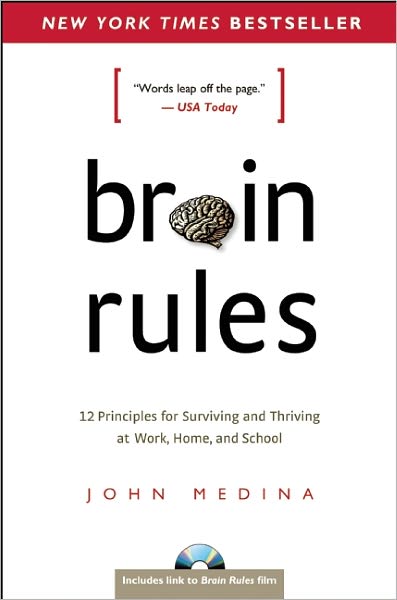
Most of us are well aware that our students all have brains that are wired quite differently. The idea that students all learn the same way and that their brains can take in learning the same way is an assumption of a 20th century factory model of education whose time of demise has come. According to John Medina, in his book Brain Rules: 12 Principles for Surviving and Thriving at Work, Home, and School, here's some things that can be done in our schools to make learning more effective in a classroom of diversely wired brains.
Cover Image
  • Smaller Class Sizes: In spite of the rhetoric in the news about "class sizes don't matter," according to Medina they do matter. He says, "Given every brain is wired differently, being able to read a student's mind is a powerful tool in the hands of a teacher." It's difficult to read student minds when you have 35 to 40 minds as opposed to 20 to 25, or even smaller. Further, Medina states, "Because a teacher can keep track of only so many minds, there must be a limit on the number of students in a class---the smaller the better." If you're churning on test scores alone, maybe class size doesn't matter, but if you're trying to keep up with student minds and differentiating learning, class size does matter.
  • Customized Instruction: The old admonition to create more individualized instruction has a great deal of support in brain research. Medina writes: "You cannot change the fact that the human brain is individually wired. Every student's brain, every employee's brain, every customer's brain is wired differently. That's the Brain Rule. You can either accede to it or ignore it. The current system of education chooses the latter, to our detriment. It needs to be torn down and newly envisioned, in a Manhattan Project -size commitment to individualizing instruction." That settles it, we should strive to individualize instruction for our students rather than engage in trying to standardize it for all students.
It is clear from Medina's work that two things we need to be doing in education are providing smaller class sizes where teachers can "get to know their students' brains" and customize instruction to fit the individual brain wiring our students have. In an era that seeks more and more standardization through testing and common standards, Medina's book makes us wonder whether we are doing the right thing with our current education policy. As usual policymakers engage in reforms that are the opposite of what we should be doing.


Baca Selengkapnya ....

Power of Teachers with iPads to Transform Teaching and Learning

Posted by Unknown Senin, 30 Mei 2011 0 komentar
 Back in 2001, Ted McCain and Ian Jukes said this about technology in general:
"We need to rethink what is really important in the use of technology. Amazingly, it is not the technology but the people who use it and their mind-sets that are the critical determining factors."
One thing I notice immediately in this classroom is the emphasis on what students are doing with the iPads, and not the iPads themselves. As McCain and Jukes pointed out, the technology itself isn't amazing, its the users and the mindset they have about its use that is more important.


The students in Larry Mitchell's class are not just using iPads. Any teacher can get kids to do that. What's more important are the high-level 21st century tasks of communicating, creating, and collaborating using the iPads that is our goal as 21st century educators. These students are demonstrating the mindsets of technology users to tackle educational tasks.

Perhaps the real challenge we have as administrators is supporting and fostering classrooms just like these. It is a whole new way of learning.


Observations on Transforming Classrooms with Mobile Devices

  • The teacher in this video is knowledgeable about what the iPad can and cannot do. It is more than obvious in the video that the teacher is a knowledgeable user of the device too. He doesn't just hand it to them and tell them to go to it. He facilitates the learning they are doing with the devices.
  • Use of the iPad in this classroom is not an add-on; it is an integral part of what students are being asked to do educationally. The iPad is not a toy passed out to students when they've been good. They are using it as a 21st century tool should be used: solving real problems, engaging and creating, and innovating.
  • Learning in this classroom is truly individualized. Students are engaged in custom learning tasks that fit their needs and interests.

Thanks again @skipvia for Tweeting this link to me.

Baca Selengkapnya ....

A New Model for Writing Instruction for the 21st Century

Posted by Unknown Rabu, 30 Juni 2010 0 komentar
A couple of months ago, our tenth graders received their writing scores for the year. As a school we did very well with our proficiency level of 96 percent. What really bothers me about that particular writing test is a burning question, "Does it accurately measure the kinds of writing our students need to be doing in the 21st century?" Our students in North Carolina are asked to complete a writing test every March. On this test they are asked to complete "an extended informational response" which is further described as writing definition or cause and effect. Students are then scored for content and writing conventions. Basically, the prompts that I reviewed asked students to write articles or letters on a variety of topics. (North Carolina provides access to their writing prompts on the grade 10 writing assessment site here.) They also provide a full description of the assessment and how it relates to No Child Left Behind legislation. But even with all of the information provided by the state, my burning question persists? Just how does this assessment reflect the kinds of writing our students are doing and will be doing in the 21st century?

As a long-time English teacher who enjoyed teaching writing to students, it really concerns me that we are still using an assessment that does not authentically assess writing of the 21st century. The National Council Teachers of English have weighed in on this issue by describing the profound changes needed in literacy education and literacy practices. Because of these changes, they provide some imperatives schools might do well to heed.

  • Our schools and our nation need to recognize and validate the many ways we all are writing.
  • We need to develop new models of writing, design a new curriculum supporting those models, and create models for teaching that curriculum.
  • We need to make sure that all students have the opportunity to write and learn in intellectually stimulating classrooms.
  • We need to recognize that out-of-school literacy practices are as critical to students' development as what occurs in the classroom and take advantage of this to better connect classroom work to real-world situations that students will encounter across a lifetime. ("Writing in 21st Century" NCTE.)
The North Carolina 10th Grade Writing Assessment has students writing letters and articles, as if our students are going to become journalists or 20th century citizens who send letters to the editor to their local newspaper. What exactly is not authentic about this activity? First of all, today's students do not read the newspaper. (I am not sure they have ever read the newspaper, but I will give a nod at our state's effort at trying to make the writing task authentic.) Students today, according to the many studies done on "digital natives," they do not read newspapers; they get their information from the Internet. Secondly, 21st century citizens are not likely to respond to issues using letters to the editor. They are more likely to respond to those issues using 21st century tools like blog posts, comment postings, and even posting YouTube Videos.  Besides, how is writing a letter to the editor of a newspaper or an article for the newspaper an "authentic" activity when newspapers are slowly becoming nonexistent? Let's face it, the North Carolina 10th Grade Writing Assessment has become a fossil.

Perhaps we need to begin just as NCTE suggests. Let's validate and recognize all the ways students can write or express themselves with 21st century tools. I realize that could be quite a massive list, but let's start by recognizing that composition and response to issues no longer requires written words. If student gets upset with the BP oil spill disaster, they can post a video they've created on YouTube. They can post an original song they've sung in a podcast. They can post original photos with accompanying music in a slideshow. The list is endless, and as online Web 2.0 tools continue to evolve and be developed, the list of ways students can communicate ideas in the 21st century is never complete. Of course, we still need to have students use the written word. There is still much that has to be communicated that way. But the five-paragraph essay should be relegated to the slag heap immediately. No one ever authentically wrote that way anyway, and writing assessments that force teachers to teach in that manner need to be thrown into the same slag heap. Let's take a close, ongoing look at the kinds of writing our students do and the kinds of writing the 21st century will require them to do and toss out 21st century writing assessments and 21st century writing pedagogy.

Once we've tossed out that irrelevant writing assessment and writing curriculum, we need to do as the NCTE suggests: "develop new models of writing, new curriculum supporting those new models, and develop new models to teach the new writing curriculum." Kathleen Blake Yancey posts a report entitled "Writing in the 21st Century" on the NCTE web site. In that report, she provides a historical context to writing instruction and some themes to think about as we ponder writing in the 21st century. For example, she states "with digital technology and, especially Web 2.0, it seems writers are everywhere." Any new model of writing can't ignore that our students live in a world where "writers are everywhere" and that people "write in order to participate" which is actually an entirely different purpose for writing than to persuade or inform. Any new model of writing would be useless if it still had students writing essays and letters to the editor. Instead, our new models of writing need focus on how writers can use 21st century tools to express themselves in a world where anyone can have his or her writing published.

Once we have our new model of writing and the curriculum to be taught with it, we need revamp the old twentieth century classroom where students sit quietly at desks writing introductions-bodies-conclusions on ruled paper to be handed in at the end of the class. This is the real world of our students. If we want writing instruction to be intellectually stimulating, we need to give them real-world issues, concerns and problems. Then we ask them to use 21st century tools to respond, investigate, report back, and create solutions. English teachers need to put away their red pens which have been used to bleed all over student papers for the last hundred years or so, and become facilitators who empower their students to learn how to communicate effectively in the 21st century with 21st century media.

Finally, like NCTE suggests we need to quit separating what students should be doing in school from what they do at home. Asking students to write an essay in the English classroom using a pen and a sheet of paper then turning it in is an obsolete practice. Amazingly, our students do this, then on their way out of the classroom, they pull out their cell phones and they send a concise text message that follows very strict rules to a friend. We basically ask them to do the inauthentic before they can engage in the authentic. Why can't we have students authentically engaged in using 21st century media as a part of regular writing instruction?

It is time. We need a 21st century model of writing. Actually, we needed it yesterday, but we do need to move the kinds of writing and writing assessments we ask students to do out of the last century. Those of us in administration positions need to help our English teachers make this happen. We need to advocate to policy makers the imperative to remove outdated, irrelevant assessments like the North Carolina 10th Grade Writing Assessment. We need to support our teachers as they seek these new writing models, develop the curriculum to teach them, and provide them with the kinds of access to technology in their classrooms that make writing authentic again.

Baca Selengkapnya ....

TaskTome: Task Management Software for Those Who Want Simple

Posted by Unknown Minggu, 28 Maret 2010 0 komentar

As an administrator, I am always looking for solutions to managing the many tasks that come with being a school principal. During the course of the day, one or two dozen tasks can often come across my desk, and trying to find a way to keep track of all of these is problematic. Of course there are the usual Web 2.0 tools like Google Calendar, Remember the Milk, and Ta-Da Lists. All of the online tools have their positives and negatives, but I am always game for trying new software.

I honestly do not recall when and where I first heard of taskTome, but I do remember reading about it in some open source review. It looked promising so I downloaded a copy from http://tasktome.shanemca.com/. After installing it, I found it really does work as advertised. It basically has five main features:

1. Planner: You can use this feature to keep track of events. It allows you to enter an event, just like many calendar programs, but there is no alarm or reminder feature. The calendar has a very simple interface.

image

taskTome Calendar Interface

2. Tasks Manager: The Tasks interface for taskTome is also simple. It gives the user the ability to create tasks by clicking a single button. These tasks can then be given due dates, placed in a category, and assigned a priority. Again, though, there is no reminder alarm system with the software.

image

taskTome Tasks List Interface

3. Diary Entry: One feature that I found interesting with taskTome was the ability to enter Diary entries. During my tenure as an administrator, I keep a running administrative log that contains notes regarding administrative actions taken and the incidents and situations faced every day while on the job. This feature is a handy one to have for someone who is keeping a daily log of activities for documentation purposes. The only feature I wish was included was a timestamp button so that I could easily enter the time.

image

taskTome Diary Interface

4. Notes Entry: TaskTome also gives users a place to enter notes. This is basically a simple notepad like interface where users can enter information and insert dates and objects into them. Useful for keeping additional notes tied to tasks or events.

image

taskTome Notes Interface

5. Financial Tracking: TaskTome’s financial tracking feature was personally the least useful feature for me. Perhaps that is because so much of the schools expenses are tracked in other ways. Still, it looks simple enough and might prove useful to some.

image

taskTome Financial Interface

TaskTome is a very simple Task tracking program. For the user who really does not need a lot of extra bells and whistles, this program fits the bill. It has the ability export its event list, task list, diary entries, and notes, and will also export these same documents into PDF files. The program is also small enough to install and operate from a flash drive. It truly is a simple task management program.


Baca Selengkapnya ....

How Politics Can Hamper School and Curriculum Reform Efforts

Posted by Unknown Selasa, 16 Februari 2010 0 komentar
If you have been educator for any length of time, you know how difficult it is to get the education system to change. During the nineties, I remember all to well the struggles my high school had when we were trying to switch to block scheduling from the traditional six-period day. It took an entire two years to get the idea finally implemented, because it honestly takes long time to win over students, parents and teachers. One of the obstacles to any change or reform in schools is the common belief out there, that schools "should be just like they were when I attended." Everyone has some kind of idealized picture of how school should be, and attempts to change that picture receive very hostile attention.

A recent illustration of this hostility was North Carolina's attempts to revise the social studies and history curriculum. Basically, the state wanted to spread out the study of history over multiple grades so that students could get a more in-depth look at history and social studies. In a memo June Atkinson, State Superintendent, states that "one of the over-arching goals of the new curriculum standards was to give our students the opportunity to study U.S. history in depth to the present day." Because of this the team that wrote the proposed curriculum so that students would receive multiple opportunities to study U.S. history through reconstruction before they entered high school. In effect, STUDENTS WOULD RECEIVE MORE HISTORY RATHER THAN LESS. This mess all started after FOX news misrepresented the facts, as they so often do. They published a story that stated that "North Carolina Schools May Cut Chunk Out of U.S. History Lessons." The proposal from the North Carolina curriculum team was an attempt to restructure the U.S. History curriculum so that students encountered more of history. Well, after FOX News did its magic, our state education leaders found themselves battling the lies and half-truths spread by a national news network.

To make matters worse, it seems our state politicians are now voicing their concerns. In a letter published here, and written to our state superintendent and State School Board Chairman, one of our state senators, Marc Basnight voices his opposition to any changes in the high school history curriculum. His rationale is simply that only high school students can understand and appreciate our country's history like the Civil War or our country's founding. His suggestion to "offer history as an extracurricular activity outside the school day" demonstrates just how far removed this man is from the realities of the modern school and classroom. I'm sure we would have a million students waiting in line to study history after school! His argument in a nutshell is that "U.S. history must be taught in its entirety during the high school years." No room for experimentation or change. What is really interesting is the veiled threat placed at the end of the letter. "I look forward to working with you as we continue improving education in our state." My personal translation of that is, "Keep you hands off our history curriculum, or I will introduce and get passed a law that mandates that all U.S. History is taught in high school." It does not take a long look at our state's history to see that our legislature has no qualms about meddling in curriculum.

This incident illustrates the same forces at work that are keeping or trying to keep schools from moving into the 21st Century. The tendency to want to keep schools like they were in some earlier ideal time is extremely strong, and it is very difficult to introduce and implement change because of this. Whether it is suggested curriculum change like this one, or some kind of restructuring of the school calendar, politics sometimes dictates that schools should be same as the schools of yesterday.

I suppose the question at this point is, how do we break out of this rut? Usually a crisis of some kind is the easiest way. It took Sputnik and the belief that we were behind in the Space Race to change science and math instruction. Perhaps it is going to take the same kind of crisis, perceived or real, to force us to really and truly rethink our schools. When America is on the brink of becoming a true third world country because of an outdated education system, people might finally wake up and see that the schools they attended were first of all, not all that ideal. The old schools only educated a small number of our citizens. Now we are charged with educating everyone. They will also see that our schools, especially high schools are obsolete. Perhaps the true way we are going to really move our schools into the 21st Century is by attacking head-on this outdated vision of the perfect schools of the past, and replacing that image with what our high schools could really look like. Fellow 21st Century Administrators, that is no small order.

Baca Selengkapnya ....
Trik SEO Terbaru support Online Shop Baju Wanita - Original design by Bamz | Copyright of apk x8.