Tampilkan postingan dengan label education reform. Tampilkan semua postingan

Common Core: Sound Education Practice or Bad Gamble?

Posted by Unknown Kamis, 29 November 2012 0 komentar
Now that 45 states (and 3 territories) have adopted the Common Core Standards, edu-preneurs and opportunists have gone into overdrive, churning out tons of materials, programs, and trainings to help schools and school districts implement these standards. Not a day goes by that I don't receive 15 or so emails from companies and individuals offering their wares and promising successful and complete implementation of the Common Core Standards.

 By all this hype, one would be tempted to think that the whole idea of having national standards was more about providing enterprising individuals and other entrepreneurs another opportunity to make millions from the public coffers.  Is the Common Core just another opportunity for making money, or is it a 21st century policy decision? Or, is it a continuation of a outdated education paradigm that refuses to die? Could it be that the Common Core adoption is nothing more than a "wrong bet" as education researcher and author Yong Zhao calls it?

In his latest book, World Class Learners: Educating Creative and Entrepreneurial Students, Zhao writes:

"The traditional education paradigm may have worked before but it is no longer adequate for the changed world. The efforts to develop a common curriculum, nationally and internationally, are simply working to perfect an outdated paradigm. The outcomes are precisely the opposite of the talents we need for the new era. It is the wrong bet for our children's future."

The thought that "If we just have the right standards, the right tests, then our students will achieve still blindly sees students as products to be developed. As long as we continue to view education as a process by which we bring students up to "standard" and not to their true potential, we are doomed to remain in the same cycle of education reform we've been in since the 1950s. Over and over, the political mantra has been, "We've got to raise educational standards!" Yet, little really every changes in our American education system. We are, in a word, hung up on a core assumption that education is something done to students rather than something they engage in.

I would like to hope that somehow the Common Core is an answer to our educational problems, but my own experience and knowledge tells me that it very well could be the "wrong bet" as Zhao calls it. Here's where some of my own skepticism lies:

  • There is no research that says having common standards is going to somehow better meet the needs of 21st century students.Some will say "Common sense tells you that having common standards will raise the achievement of all," but then again, "It was common sense that told us the world was flat too."
  • Common standards by its very nature assumes students have common capabilities, abilities and talents to some degree. Reality tells us something much different. Students have all manner of abilities and talents, and being able capitalize on individual talents and abilities rather than trying to standardize each child is what education should be about which is not what the Common Standards movement is about.
  • The Common Core Standards movement is at its core more about having "standards for comparison purposes" than it is about truly meeting the individual needs of students. When politicians, policy-makers, and education leaders are more interested in developing a system that allows them to say "Our education system is better than yours," the needs of individual students suffer. The assumption that "we need to be able to compare students" is perhaps faulty to begin with. Students, and human beings, are different, and can't be considered cogs in a system.
  • We are truly deceived if we think having the bragging rights of saying "US students lead the world in test scores" is going cause companies to suddenly relocate jobs and businesses in the states. Businesses move to other countries for economic reasons: they move to where labor is cheapest, period. To argue that "test-score bragging rights" will suddenly turn around our economy ignores the reality that businesses want cheaper employees, not necessarily more educated ones.
I know those who developed and have been trying to sell the Common Core mean well. Educators in the US have meant well all the way back to Sputnik and beyond. Still, I think it is important for us to remain skeptical as well, especially of initiatives like the Common Core implementation. A great deal of money and effort is being put into this education reform, and I can only hope it is more about the kids we teach every day, than business opportunity and professional advancement and political bragging rights. I just hope we haven't made the wrong bet.

Baca Selengkapnya ....

7 Kinds of Thinking Keeping Your School or District from Transformation

Posted by Unknown Sabtu, 03 November 2012 0 komentar
Is your school or district “missing the wave of change” that is propelling many other innovative schools and districts forward? What exactly is it within the DNA and thinking of your educational organization that is causing it to resist efforts to reform, transform, or change? We only need to look to business in recent times to learn what the consequences are for “failing to adapt to the enormous wave of change” that is all around us.

In Out of Our Minds: Learning to Be Creative, Ken Robinson writes:

“Organizations that stand still are likely to be swept aside, and corporate history is littered with the wreckage of companies and whole industries, that have been resistant to change. They become stuck in old habits and missed the wave of change that carried more innovative companies forward.”

Many of our schools are “standing still” and stuck in "old habits" and are in danger of being “swept aside.” It is difficult to believe in an era of reform, but there are still educators, policymakers, and politicians who are “stuck in the old habits” of seeing education “as something done to kids,” and who see children’s learning as a “process of adding value.” Those, who hold tight to this conception of education where children are passive participants in learning, will be standing among the “wreckage” of a public education system that stubbornly held on to past era.

Believe or not, I experienced this “wave of change” at an early age. At only seven or eight years old, I experienced firsthand Ken Robinson’s phenomenon of companies “standing still in a wave of change” way back in the 1970s. My father worked for the trucking industry, which at the time was a way to make a good living. Then, deregulation came along, and many of the trucking companies refused to adapt and cope with the new world they faced, and they went under, one by one. My father worked for a series of successive trucking companies, each folding the tent when they could not longer adapt and cope with rapidly changing transportation industry. Instead of adapting to the change, they tried to ride it out, only to ride into nonexistence.

Fast forward to more recent times and we see the same thing happening again and again with businesses. If you glance back four of five years, the names of companies like Circuit City, Blockbuster, and Borders come to mind. Each of these companies stood still in the face of change and it cost them dearly. More recently, news reports speak about the struggles of Best Buy, a major electronics retailer, who is trying to cope with the rapidly changing retail environment, and who seems guilty of the same kinds of thinking these businesses had. Each of these businesses found themselves in a changing environment and made decisions, based on specific and stagnation-generating kinds of thinking. With the exception of Best Buy at this point, that thinking ended in their demise. They could not adapt.

If you examine your school or district closely, you are likely to find this same self-destructive thinking that is causing your educational organization to “stand still in a wave of change.” If it continues, then you could find yourself standing in the wreckage.

What are these kinds of thinking that are clearly obstacles to adaptation and transformation? Over the years, I have come to see them in very simple terms. Here are the top 7 Kinds of Thinking, or what I might call “Resistors to Change.”
  • “We’ve always done it this way thinking.” In public education, I have found this kind of thinking the most common. You can easily run up against this thinking by simply questioning a policy or procedure, or by suggesting a new way of doing something. Immediate replies by the institutional-preservation police are, “You can’t do it that way. We've always done it this way.” Or, more simply, “I like the way we've always done it.” At the heart of our schools and school districts are thousands of these “ways of doing things” that are protected vehemently by others, not because there is anything special about them. These are valued because they are wrongly seen as  not negotiable for change. The best antidote for this kind of thinking? Asking the simple “Why” question. If the answer is, “Because we’ve always done it this way,” then the underlying rationale might be suspect.
  • “Head in the sand thinking.” I can’t help but wonder if this was the kind of thinking Blockbuster was guilty of. They had to see streaming video services coming, especially if they were reading anything about industry trends. But just as deadly as ignoring the “waves of change” can be, so can the same head-in-the-sand habit of getting so caught up in “the doing” that you don’t see the change coming. In other words, sometimes organizations are so busy caught up in doing what they do, that they don’t pause and connect to the world around them. In that environment, it is extremely easy to miss the “wave of change” right in front of you. Schools are sometimes notorious for adhering steadfastly to motions they've always carried out, and with change roiling all around them. Each of these businesses certainly had to be guilty of some of that. They did not notice the change until it was too late. That can happen to schools too. Antidote for this kind of thinking? Simply being informed. Having the latest information goes a long way helping education organizations avoid being blindsided by change. But there must be a willingness and courage to act on that information.
  • “It’s someone or something else’s fault thinking.” Back in the 1970s, many of those trucking companies complained that is was the government’s fault they had to go out of business, after all politicians brought about deregulation. In more recent times, I am sure there were those at Borders who blamed cheap electronic books and Amazon for their demise, and currently I read  where Best Buy is blaming Amazon for their problem of decreasing sales. Schools, school leaders, and policymakers do the very same thing. It’s the teachers’ unions fault. It’s the politicians’ fault. It’s the parents’ fault. In the interest of honesty and confession, I have been guilty of this thinking myself. Still, there’s no productivity in searching for a boogie man on which to place blame. There’s certainly enough blame to go  around anyway. If you spend all your effort and time trying to find someone or something to blame, you are wasting energy and resources that could be used to adapt and meet solidly the “wave of change” that is upon you. The best antidote for this kind of thinking is perhaps to engage in looking for solutions. That way, there’s no energy to expend on blaming.
  • “You have to do it this way because policy says so thinking.” I honestly find this one of the most ridiculous reasons why we defend so much of what we do in education. Educational institutions are notorious for this kind of thinking, and often they do it much more than businesses. Businesses, to exist for any length of time, are most often forced to question what they do, and when they become too entangled in “policy-think” they lose sight of their reason for existence: making money. Then they simply cease to exist. On the other hand, schools do the same kind of thinking too, and they continue to perpetuate it. They get so caught up in “policy-think” they lose sight of their purpose too. This is most evident when decisions are made, clearly not in the best interest of kids. When adhering to a policy is more important than meeting the needs of kids, the school or district has lost sight of its purpose, and it’s reason for existence, and the world will move on without it. Antidote for “policy-think?” Spending some refocusing on why we do what we do, the kids.
  • “I’m right and everyone else is wrong thinking.” In our polarized society right now, there is a great deal of this kind of thinking, and it can have a detrimental effect on an organization facing a “wave of change.” There was a time when being “open-minded” was a virtue, and compromise was not a dirty word. Tolerance ruled the day. Now, our polarized “”I’m right thinking” has bled over into our schools too. Polarized debates on topics such as school vouchers, sex education, prayer in schools, and teachers’ unions only serve to widen the divide between people. If someone questions the effectiveness or usefulness of these measures, they are immediately attacked.We can’t have an honest look at policy change without one side or the other cooking the data, which in educational research is all too easy to do. An immense amount of effort is going into establishing the “I’m right and you’re wrong” view, and the waves of change meanwhile are slamming hard into our educational institutions. There is greater interest in proving the other side wrong, than learning the truth of what really does work. What is an antidote for “polarized thinking?” Realizing that there is nothing sacred about being right in the debate, especially when it’s more important to do what’s right for the kids.
  • “Protect our turf at all costs thinking.” I have often thought, the only people who have a claim to “turf” in public education should be the kids, and that turf is “What’s in their best interests.” When the “waves of change” started battering the trucking industry in the 1970s, I remember well how trucking company owners held strongly to their turf of wanting wage concessions and benefit reductions to preserve the company. Union trucking company workers held equal ground on these same issues of turf, and in the end, both sides lost. Companies closed, and no one had any turf to battle over any more. Fast forward today, and the recent complaints by Best Buy about Amazon seem to be the same kind of turf battle. Best Buy does not appreciate Amazon’s selling electronics and appliances to undercut their prices, so there was talk about Best Buy refusing to sell Amazon’s Kindle readers. The end result of this turf war would not improve Best Buy’s current situation against the “wave of change” that is upon them. There is just too much money to be made in electronics and appliances. Protect the turf at all costs thinking in both these cases results in both sides losing. Amazon loses satisfying customers who want to go purchase an e-reader locally. Best Buy loses that customer who came to their store to purposefully buy an ereader. In education, protect-our-turf-at-all-costs thinking is happening on multiple levels. It is most insidious at the local level, where individuals fight hard to preserve what exists because it is their turf, and they’re not giving it up. Antidote for “turf-protecting thinking is simple. Keep your eyes focused on the real reason why we do what we do, the kids. Recognize that we share a common purpose.
  • “Change for Change’s Sake thinking.” With everyone yelling about the need to reform our education system, this is perhaps one of the most increasingly common forms of thinking that keeps a school or district from moving forward. This kind of thinking is perhaps best illustrated by the argument many make for certain reforms, by simply stating, “Well, we’ve got to do something.” This kind of thinking is responsible for the endless wheel of reform, education often finds itself on. Educators and policymakers institute change because, in their view, change is called for. Never mind whether the change is sound or really addresses the issues. Many people accuse those who speak out against such reforms or proposals as “defending the status quo” or as “advocating for what is.” But “We’ve just got change this” thinking is just as dangerous to an organization as well. When Borders decided to enter the ebook market, a great deal of blood between Barnes and Noble and Amazon had already been spilt. Their decision was late, and more importantly, it was reactionary thinking. Change for change’s sake thinking is reactionary thinking without deliberation. It is deciding to take a course of action, not because it is the best course of action, but because “We’ve got to do something.” I can’t but wonder whether a great deal of our current national ed policy under Race to the Top is this kind of thinking. There is no research to support that having Common Standards, instituting merit pay for teachers, or using value-added measures is going to raise student achievement. In fact, there is some research to the contrary, yet there’s the push to implement reform, and anyone who questions it is said to be guilty of “supporting the status quo.” Change of change’s sake thinking submits to simply taking a course of action, because there’s a perceived obligation to do so. The antidote for the reactionary thinking of this kind is simply pausing and resisting the urge to do something immediately. By pausing, you buy time for level heads to prevail. 
There are certainly many other kinds of thinking that would cause a district or school to miss that “wave of change” that propels other schools and districts to successful innovation. In my experience, the forces within a school or school district employ any and all of these ways of thinking to preserve things just as they are. Let’s just hope those schools and districts don’t end up like Circuit City, Borders, or Blockbuster.


Baca Selengkapnya ....

Indicators of a World-Class 21st Century Education System

Posted by Unknown Selasa, 23 Oktober 2012 0 komentar
With all the talk about having a “world-class education system” from politicians and policymakers, one would think that our schools would be undergoing major reforms designed to create exactly the kinds of schools that foster 21st century learning and education. Too often though, I suspect this isn't the case, because these individuals define “world-class” as simply “having the best test scores in the world” because in their next breath they lament just how poorly American students compare with other international students on tests like the Program for International Student Assessment (PISA). To many of these individuals, this equation seems to apply:

WORLD CLASS EDUCATION SYSTEM = HAVING HIGHEST TEST SCORES IN WORLD

Without a doubt, many of these politicians and policymakers define “world-class” in ways that clearly create “world-class schools” better fitted for the Industrial age where factories and assembly lines were the ultimate destinations of students. These so-called “world class education systems” are, to put it bluntly, schools that churn out “good test scores.”  In a word, a world-class education, in their eyes,  is still about an education done to students rather than something in which they engage in.

Because of this view of “world-class education systems” our politicians and policy-makers, we continue to tweak the edges of our education system instead of really finding substantial ways to reform our education system.
  • We develop new standards and new tests, thinking that if only the hurdles were higher and the measurements tougher, then we would have a “world-class education system.
  • We extend the school day, thinking that only if we subjected our students with more of the same for longer periods of time, we would have a world class education system.
  • We add technology to our schools to help us teach like we have always have done, instead of allowing the technology to help us rethink learning and teaching.
  • We toughen or change graduation standards every four years when new at the whim of the next politician in office, whose thinking is that if we only change the ingredients of our graduation mixture, we would have a world class education system. 
In a word, we continue the same cycles of reform and deform that began with the Sputnik declarations in the 1950s and 1960s, because we can’t let go of a fundamental deeply held belief that education is something done to students rather than something they engage in.

If we were to be honest with ourselves and sincerely asked the question, “What does a truly world class education system for the 21st century look like?” we need to look further than higher test scores.
  • A “world-class” education system is about educating students to tackle 21st century issues, not about achievement test scores.
  • A “world-class” education system engages students in authentic learning experiences, not standardized learning experiences.
  • A “world class” education system actively engages students in their own learning, and does not have them sit passively in classrooms, waiting for the content to be delivered to them.
In his latest book, World Class Learners: Educating Creative and Entrepreneurial Students, Yong Zhao provides a thought-provoking list of indicators of a world-class education system. According to him,  we don’t need 21st century schools that churn out “acceptable” test scores like the 20th century schools. We need 21st century schools that foster creativity, entrepreneurial thinking, and innovation. Here are “Eight Indicators of World-Class Schools” adapted and paraphrased from Zhao’s book.

1. A world class education system gives students the “right and opportunity” to participate in school governance, and in constructing the physical, social, and cognitive school environment. Zhao points out the dictatorial nature of our current education system. It seeks to dictate exactly what every student should learn, without regard to her interests or talents.  Students aren't provided opportunities to have any say in their own learning. The whole idea of “educating students” is something done to them, and they are passive participants. In a world-class education system they have a say in their own learning. They participate in the development and construction of their own learning and places of learning. In a word, they are empowered to take ownership of their own learning.

2. A world class education capitalizes on student engagement by giving students a curriculum that is broad and flexible. The curriculum gives students the freedom to pursue their own interests and the development of their own personal talents, rather than creating standardized workers capable of all performing the same tasks. Our current education still seeks to narrow the curriculum and make it rigid. The belief that there are a list of skills and talents every student should have drives a curriculum narrowly focused on skills and talents subject to standardized testing. A world-class education system has a broad, flexible curriculum that can be individually tailored to the interests, talents, and abilities of each student.

3. A world class education system provides personal support for each of its students. Our traditional schools were and still are still set up to deliver an assembly-line education in a standardized manner. A true world-class education system provides what Zhao calls sufficient and accessible “emotional, social, and cognitive support for students so they can personalize their own learning.” All students are connected to at least one significant adult in the building. A world-class education system personalizes each student’s education through a solid system of support.

4. A world class education system engages students in authentic learning experiences that ask them to create authentic products of learning. In our current traditional system of education, students still spend a great deal of their learning time engaged in inauthentic activities involving worksheets, textbooks, and standardized tests. Instead, students in a world-class education system are engaged in learning where student work is defined as authentic and real-world. A world-class education system engages students in 21st century learning tasks that are authentic and personally meaningful.

5. A world class education system engages students in a sustained and disciplined process of learning. In the old traditional education system, students basically complete their work. The teacher grades it and gives it back. In a world-class education system, students are engaged in a learning process that asks them to develop, review, evaluate and revise. In this kind of learning, students are clearly engaged in more that finding right answers and giving them to the teacher. They are engaged in a world-class education that asks them develop, evaluate, revise, and promote products of their learning.

6. A world class education system capitalizes on the local strengths of its students, teachers. A world class education system takes advantage of the locale of its schools, and it effectively taps into community resources. The schools' teaching reflects the strengths of its teaching staff. The system provides ways for both teachers and students to exploit their own talents and interests.  A world class education system seeks not to standardize, but to make the most of both its students and teachers in all learning.

7. A world class education system has a world orientation. This means simply, that the school operates from a global perspective, not the narrow perspective of local community or even country. World-class schools seek international partnerships, and students are engaged in learning involving global issues. In addition, students are engaged in frequent interactions with students from other countries. In other words, a world-class education system moves students and their learning beyond the walls of their classrooms and even the borders of their country.

8. A world class education system develops the global competence in its students. Global competence refers to the ability of students to interact with others from different cultures. This means in world-class schools, foreign languages and cultural learning are important. It means students have opportunities to interact with these foreign cultures either through the use of technology or through field trips. In other words, a world-class education system provides opportunities for students to experience other countries and cultures in engaging and relevant ways.

Having a world-class education system is more than having one where decision makers can have bragging rights to the highest scores in the world. Ultimately, a world-class education system focuses on student engagement, student choice, personalization, authentic learning, global perspective, and global competence. Unfortunately, these are things that often make education messy.

Baca Selengkapnya ....

Six Practices of Schools and School Districts Marching to Obsolescence

Posted by Unknown Senin, 15 Oktober 2012 0 komentar
In 2012, the powerful inertia to keep schools and school districts the same continues to dampen and  neutralize any efforts to innovate and change how schools operate. We are still on a march to obsolescence.

A recent example of this inertia in North Carolina, was when school districts tried to innovate with changing their school calendars. School districts shifted their calendars to better align their semester schedules with student needs. But it was the powerful tourism lobby, Save Our Summers,  that then pushed lawmakers to set legal limits when schools can start and end because, as their web site says, they “seek to establish, protect and maintain a more traditional school calendar.” Maintaining a “traditional” school calendar was not about helping schools do a better job teaching kids, it was mostly about preservation of the status quo, and preserving the school calendar they enjoyed while attending Industrial Age schools, not to mention profit.

These kind of efforts are simply attempts to keep the same Industrial Age schools of the previous century. These forces of inertia are making our schools obsolete simply because too many of them are made up of people who hold tightly to a nostalgic view of an ideal standard school that never really existed, except in the minds of the few of them for which schools worked. As Frank Kelly, Ted McCain and Ian Jukes write in their book, Teaching the Digital Generation: No More Cookie-Cutter High Schools,

“The most important issue facing schools today is the reluctance of those in control of education to let go of what they are used to, whatever their role in the system.”

The people and forces at work to preserve our education system as it is are powerful and strong. There are the politicians who see nothing wrong with the school systems that provided them with opportunities, so they continue to make laws that prop up the Industrial Age schools and districts they know. Policymakers are often beholden to politicians because they are left with trying to create policy that follows the letter of the law and regulations developed by politicians. Teachers, who very often excelled under a 20th century, standardized, Industrial Age education, are reluctant to change teaching methodology because, after all, “It worked for me.” School and district administrators and staff are more engaged in carrying the dictates of policy from on high, and often do not see their place as “One to question why.” Then there are parents, who very often had positive school experiences when they were in school, so they want the exact same schools for their children.

Is it any wonder with all these forces at work, that most reform occurs at the edges of our school system as Milton Chen describes in his book Education Nation: Six Leading Edges of Innovation in Our Schools? Is it any wonder we spend most of our time tweaking schedules, lengthening school days, implementing new sets of standards and new testing, and trying to force technology to help us educate students as we always have done? And yet our drop out rates only improve marginally, student measures are down. Our schools are still on the road to obsolescence, because we are still engaged in practices that preserve 20th century Industrial age schooling.

Here’s a list of some of those practices that are really moving our schools to obsolescence:
  • We still design and build schools structurally the way they always have been. While I certainly do not advocate building the open school buildings of the 60s and 70s and causing that fiasco, today, it seems little thought seems to go in the designs of our school buildings. We are still building structures containing distinct classrooms to house students in assembly-line manner to push them through the grades, like products. Perhaps we should be building schools with flexible learning spaces with walls easily removed and reconfigured to meet the needs of students, rather than fitting students to the needs of the building. Perhaps we shouldn’t even build high schools all with the same departmental classroom groupings. Maybe to meet the needs of students, classrooms are arranged by areas of interest or study, with core content teachers working within these instead of departments. Or, maybe one high school need only have art studios, music studios, or an acting theater rather than a football stadium and science labs. Such a school would be structured to meet the needs of art students, rather than STEM or athletics. In other words, we need to design school buildings to meet the needs of all 21st century students, rather than trying to fit students in predetermined school structures that have no flexibility
  • In many of our schools, we still have teachers engaged in teaching the same ways they have always taught and were taught. The argument that lecture is a perfectly fine method of teaching because it worked for me is a step toward obsolescence. We need to stop trying to fit students to teaching and instruction, and instead, fit teaching and instruction to the needs of students. Students need to have the options of learning traditionally if they wish, but they also need to be able to learn through project-based or problem-based learning if that fits their needs. They need to be able to engage in online learning and internships if those fit their learning needs. They need to be able to engage in the kinds of learning that fits them, instead of schools trying to force students to learn in ways that do not work for them.
  • We still are too often engaged in finding ways to get technology to help us educate as we always have instead of using technology to reinvent teaching and learning. Students typing 5 paragraph essays on computers hardly qualifies as technology integration. Having teachers use PowerPoint to enhance their lectures hardly makes for 21st century teaching. Using the Internet solely as an information source, instead of a tool to engage in global learning and connecting, hardly means using it for 21st century learning. Our schools still plod toward obsolescence because we still think of technology as a means to do the things we’ve always done better, rather than using it to reinvent what we are able to do.
  • We still sacrifice kids to uphold policy and procedure rather than developing policy and procedures to meet the needs of kids. How many times do we prevent a student from taking a higher level course simply because they do not have the requisite “seat time” in another class, especially when we know that student is perfectly capable to being successful in that class? How many times do we keep students in our buildings all day simply because our regulations say they have to be in the building 7.5 hours, when it would be to their advantage to spend some time working at the animal shelter? How many times have we had to purchase “state adopted” textbooks and materials because the rules only allowed us to purchase those items, when other materials would work better for our kids? Our march toward obsolescence also includes a hard-headed unwillingness to enforce and abide by policy, procedures, and regulations even though they are not always in the best interest of kids.
  • We are hard at work standardizing our schools, our curriculums, our tests, and even our instructional materials. In public education, there is a strong force that says anomalies and differences are bad. We push for schools that are same, from how they are arranged to even how their web pages are designed. Our government pushes for a standardized curriculum for all in spite of the fact that we know all students do not learn the same way, and don’t even have the same interests. We tell ourselves,  “We’re going to make scientists and mathematicians of them whether they like or not.” We give standardized tests, so that we can “measure” both students and educators and see if we have “added any value” to our students as they have progressed through our Industrial Age assembly line schools. We have policymakers pushing for e-textbooks and tablets that merely make books electronic and encourage the same kinds of learning we’ve always done. Never mind that some students do not learn best from text whether it is electronic or paper. Our efforts to standardize everything demonstrates that Industrial Age thinking still has a tenacious hold on our schools in the march toward obsolescence.
  • We are still caught thinking of school as something “done to kids” between the hours of 8 AM and 3 PM. We force teenagers into classrooms at 7:30 AM when all the research in the world, and common sense, says their intelligent thinking capacities don’t really kick in until much later in the morning. We allows bus schedules and lunch schedules drive when teaching and learning occurs instead of fitting those things to teaching and learning. We allow sports practices to dictate when school ends for all high school students, when there are some who would excel under a class schedule that extends into the early evening. We march toward obsolescence because we refuse to fundamentally rethink the school day.
I do not advocate change for change’s sake. It is just as easy to get caught up in the thinking that we have to change something because it needs changing. Many of the tweaks and changes being made to our schools are the product of this kind of thinking. Yet, our schools continue to march toward obsolescence because we are not willing to fundamentally let got of our own nostalgic view of schools and school districts. The key to moving away from obsolescence to innovation and invention is perhaps in not holding anything sacred. We must be willing question everything about our schools and school districts. By trying to find ways to preserve and better what has clearly not worked for all students in the past is a sure way to continue our march to obsolescence.

Baca Selengkapnya ....

5 Things Teachers (And Administrators) Can Do to Make Learning Real in Their Classrooms

Posted by Unknown Sabtu, 11 Agustus 2012 0 komentar
To paraphrase Marc Prensky from his collection of essays From Digital Natives to Digital Wisdom: Hopeful Essays for 21st Century Learning: “The easiest, executable solution to our education problems today “is to change what goes on in our classrooms.” We need to move from teacher-centered and teacher dominated learning models to more personal, student-centered learning models. In the process, we will do what Prensky calls “Making Education Real” for our students.

Enough of the rhetoric and cheap talk. What does it really mean to make education and learning real in the classroom? In his essay, Prensky offers “5 Things Teachers Can Do at the Beginning of the Year to Make Education Real for Their Students.” I am going to modify that just a bit a here to capture what I think are the “5 Things Teachers Can Do to Make Learning Real in Their Classrooms.”
  • Get to know your students. And this does not mean their proficiency levels and past test scores. That information is important, but if you want to make learning real for your students in your classroom, you better connect with them. Connecting means learning about what they are passionate about. It means learning who they are as persons. It means connecting with them on a personal level. For learning to be real in your classroom, you have to see students as real people, with real passionate interests and needs. No room for standardization here.
  • Reduce the amount of time you spend “telling” in your classroom and engage students in more “partnering activities” that allow students to pursue their own passions. Granted, it is a challenge when there are “Adopted Standards” waiting to be tested, but so many students don’t learn at all, much less deeply with lecture and “sit-n-get” modes of instruction. As Prensky notes, “Capitalize on students’ 21st century abilities to learn on their own.” Give them opportunities to engage in the kind of learning they are wired to do instead of forcing them to learn in an incompatible manner.
  • Facilitate learning by guiding students through their learning. Teachers can help students focus on what’s important and what’s next. They can help them make the most of 21st century learning tools to engage in content and skills. This means stepping out from the front of the classroom and standing beside or sitting with students as they learn. It means letting goal of being the center of the classroom.
  • Foster global connections with peers and experts. Teachers should assist students in connecting with other students globally. They should help students connect with experts that can help them learn. In effect, teachers should help students create their own Professional Learning Networks (PLNs). Then, they should help students care for and grow that network according to their learning needs.
  • Motivate students by allowing them to use their 21st century devices in their learning. This means setting aside the impulse to block the use of cell phones in the classroom. This means providing students with wireless access in the school building in the form of Bring Your Own Device (BYOD) initiatives and 1:1 Technology initiatives. It means engaging students in the use of social media and other technologies rather than blocking them on school networks. We can make learning real by simply allowing students to use the devices of learning they use outside our school walls.
If we really want to change education and learning for our students, let’s change what is happening in classrooms, and our buildings. Let’s make education real for our students by moving from “Telling” classrooms to “Partnering” classrooms that enable students to engage in learning.

Baca Selengkapnya ....

3 Things School Leaders Can Do Now to Revolutionize Education in Schools and Districts

Posted by Unknown 0 komentar
“The educational improvement efforts now in place are aimed at bringing back the education that American offered students in the 20th century (with some technological enhancements,” From Digital Natives to Digital Wisdom: Hopeful Essays for 21st Century Learning by Marc Prensky

Do Americans really have the stomach to “reform their schools?” Looking at the list of reforms in vogue today, one can only wonder whether reform is really the goal, or as Prensky points out, “Reform efforts are more about bringing back the education system that was,” instead of creating an education system that truly meets the needs of 21st century students. We continue to strangle our education system with accountability and testing, standardization, and general neglect, and yet, we are surprised that our students are still dropping out and still not achieving.

If we truly want to change education in our country, then perhaps we really need what Sir Ken Robinson calls an “education revolution” instead of reform. The truth is, we’ve been reforming education for years. When I left college for my first teaching job in the late 80s, the dust was still flying from frantic reform efforts to address the “issues” identified in the Reagan administration’s report A Nation at Risk. Career ladder programs were attempted to provide teachers “pay based on merit.” Standardization of education was afoot through standards implementation at the state level. Politicians were hung up on national test scores that signified “the educational apocalypse on the horizon.” And, the predominate mantra was, “Throwing money at our educational problems won’t fix them.” These ideas offer absolutely nothing revolutionary. They, like many of our reforms now, simply tweak an education system that is in need of a revolution. As Prensky points out, “However well meaning those who proposed and fund today’s educational reforms may be, their aim is generally to improve something that is obsolete.”

I actually think Prensky is being too kind. Those pushing some of the reforms today are not “well-meaning at all.” They have political and cultural agendas that actually do not want to see public schools thrive. They want to see an end to all public schools, or at least a marginalized public school system that is much weaker and irrelevant. These are the same individuals and groups that turn our schools into places where culture wars are fought and political points are scored.

The truth is, to revolutionize the education our students are getting, there are three things school leaders can focus on immediately, and none of them are magical or new. According to Marc Prensky, “Lots of money is being spent on trying to fix the educational ‘system.’ But what the reformers have haven’t yet understood is that it’s not the ‘system’ that we need to get right; it’s the education the system provides.” Let’s focus on the education our children are receiving and not the “system.” Here’s 3 things for considerations for starters:
  • Make learning authentic. Let’s engage our students in the kinds of learning that is based in the real world. Project-based learning and problem-based learning ask students to engage in real learning tasks. Even making our classrooms more real-world like makes learning more authentic. Getting students out of rows of desks and at tables or even seated in huddles on the hallway floors. There’s nothing authentic about sitting in desks carefully placed in rows, or working on questions in at the conclusion of each chapter in a textbook. Teachers standing forth lecturing and directing all student learning is also inauthentic learning. Teachers still practicing in this manner, and principals/school leaders who support this kind of teaching are guilty of malpractice. It takes authentic learning experiences to revolution the learning and education of our students.
  • Foster a school culture of support and personalization. Most schools I’ve worked in are still hard at work forcing students to fit into them rather than changing the school to fit the needs of its students. Schools can focus on the education of children by simply becoming flexible agents that bend and twist to meet the needs of students. For example, schedules do not have to be same every year. Why can’t the class schedule be revised to fit students’ needs instead of fitting students to a class schedule?  Schools must become personal places where all students are known for who they are, not by simply whether they scored “proficient on the latest test,” or by their student number. A school that truly personalizes education for students will not allow students to slip away into the anonymity of numbers. They know their students for who they, and they adapt and find ways to support and personalize education for all students.
  • Allow students to engage in using 21st century tools. Far too many schools, and their administrators, are still fighting to keep technology out. If we want to revolutionize the education our children are receiving, then let’s give them the technological tools they need to access the wealth of information online. Let’s give them opportunities to use those same tools to create content, and connect with others globally. School administrators can begin revolutionizing the education students in their schools by embracing Bring Your Own Device (BYOD) policies, 1:1 technology initiatives, and by becoming technology users themselves. Still school administrators need to be cautious and remember: the success of the education the students are receiving through technology is not measured by the number of iPads or laptops purchased. The success is found in the classrooms where teachers engage students in using these devices, not as tools “assist them to teach as they’ve always done.” But as a means to challenge and disrupt both teaching and learning.
Reform efforts abound. Just ask any politician and I’m sure you will immediately get a long list of “Things-I’m-gonna-do-to-reform-education.” Most often, this only translates into trying to turn schools into what they once were, or into what that individual would like them to be. As school leaders, we can revolutionize the education our children receive if we focus on that education and not the system. If we simply emphasize the importance of authentic learning, foster a culture of support and personalization, and give students 21st century learning experiences with 21st century tools, the education revolution will begin in our schools.

Baca Selengkapnya ....

3 Lessons Schools Can Learn From an Obsolete Hometown Newspaper

Posted by Unknown Sabtu, 12 Mei 2012 0 komentar
Today, I was attempting to read an article from our local newspaper's website. I was trying to access an article through my RSS Reader, when I got the following pop-up:

Subscribe Now
Thanks for being a frequent visitor to HickoryRecord.com. You've now viewed your monthly allowance of 5 free premium articles. We're glad you enjoy our site.
Want to read more? For full access, please purchase a monthly or annual Online Unlimited digital subscription for as little as $4.95/month.
If you are already a print subscriber, you can upgrade your account to receive complete access to hickoryrecord.com and our E-Edition. If you have already purchased your online access with your print subscription, just click "Next" below to enroll or call us at 828-384-6479 to upgrade your newspaper subscription to include our digital services.


Our small town newspaper, The Hickory Daily Record, is a mediocre newspaper at best for a number of reasons. First of all, I was once a subscriber, but I stopped home delivery because there would be stretches of days I would not receive it. I would then have to call their office, and the paper seemed content to just give me a credit when I did not receive it rather than find a way to deliver a paper. They inevitably did this rather than resolve the issue of delivery. Secondly, there's not a been a great deal of content in its pages for quite sometime. The paper edition is primarily advertisements, and the paper has had to cut its reporting staff back so much, they aren't even capable of providing the news, except what  news comes to them. Finally, the Hickory Daily Record has become irrelevant as a news source in our region. I can access free news channels such as our local TV stations, and the Charlotte Observer's site and get more information about the happenings in my hometown  than I can in my hometown newspaper. In all honesty, The Hickory Daily Record has become little more than a neighborhood newspaper with absolutely no impact on the community. It is a dinosaur that is still trying to avoid extinction. In some ways, I think public education is trying to avoid the same fate.

As you can see from the pop-up message I received, I could continue reading the article I wanted to see if I paid them $4.95 a month, but I won't pay them and I won't read the article. The whole problem is, the content offered by the Hickory Daily Record isn't worth $4.95 a month to me. You can scan their web site in less than 5 minutes. Unlike the larger newspapers, there isn't a wealth of content, certainly not 5 dollars a month worth. All this brings me to my point, "Newspapers basically still do not get it." While I have no idea how profitable the Hickory Daily Record's efforts to charge for online content is, it can't be sustainable. A glance at their site tells your they offer no amazing exclusive content you can't find elsewhere. A lot of the articles are from news wire services that offer the same text free. And, there is so little news content to begin with, in comparison to larger news sites. The bottom line is my small town newspaper is still caught in 20th century ways of delivering content and appears to be doing little to change. I can't help but wonder if our schools are still caught in the same time warp. We still try to deliver education the way we've always done too. So what can schools learn from my small town newspaper's predicament? Here's three things for thought:

1. In a digital age, we can't simply take what we've always done and post it online or digitize it and call it education. Our technology is clearly disrupting how we do things in our schools, and we'll not contain that force by trying to simply package what we're doing into 21st century packages. We need to fundamentally re-think and re-engineer everything we do in schools and take full advantage of the possibilities of the digital age.

2. We need to fundamentally re-think our digital content which is student learning. If newspapers want to have a hope of surviving online or off, they have to focus on content. People will only pay for content if they see it as engaging or useful, and if they can't get it elsewhere. As schools in the digital age, we must focus on our own "content" which is student learning. Everything we do, from front office procedures to instructional strategies in the classroom need to be about student learning. We need stop being distracted by everything that is not about student learning.

3. Twenty-first century schools need to acknowledge the competition. Newspapers like my small hometown paper haven't done this very well. They are still holding on to the belief that they offer something readers can't get elsewhere. They haven't acknowledged the competition. Whether charter schools, private schools, or virtual schools are better at raising student achievement is still debatable. That argument probably will not be settled any time soon, and most likely it will never be settled. The reality for public schools is that we have competition. Instead of expending large amounts of time discrediting the competition, let's use that energy to make our public schools better. Let's focus on what is most important.

Everyone knows newspapers haven't fared well under the onslaught of web content. Most barely survive. Some have learned that users will pay for content, if that content is of high quality, and if users can't get that same content from elsewhere. My hometown newspaper is still caught in an old paradigm that believes they can approach web content like they did paper content. They can simply post the same content from their newspaper online and people will pay for it. Of course they have tried to add some unique content like videos and information data bases, but its hard to say they've changed their content delivery model very much.  Maybe some will pay 5 dollars a month for this content, but I won't and I am sure many others won't as well. The newspaper is losing me as potential customer and I am sure there are others. If they want me to click that "Pay $4.95 Month" button they need to give me something I do not already have. Public schools would do well learn from this too. If our students aren't getting the education our parents want them to have, they aren't going to keep paying for our schools either. We have to give them the kinds of student learning they can't get elsewhere.

Baca Selengkapnya ....

NC Senate Leader Releases His Plan for Education Reform

Posted by Unknown Senin, 23 April 2012 0 komentar
North Carolina Senate President Pro Tempore Phil Berger released his education reform plan today. The plan is called the Excellent Public Schools Act. Based on a quick read-through of the legislation and from Senator Berger's Web Site, here are the reforms outlined in that plan:

  • Ending social promotion for 3rd graders who can't demonstrate they can read based on state adopted reading tests.
  • Add "intensive reading instruction" for students struggling to read.
  • Grade schools as A, B, C, D, or F based on test scores.
  • Add a North Carolina Teacher Corps program, modeled after Teach for America, that would allow recent college graduates and mid-career professionals teach in low-performing schools.
  • Pay teachers based on merit as determined by test scores?
  • End teacher tenure and have teacher sign a contract for employment each year.
  • Provide funding for the instructional days that the General Assembly added last year but did not fund.
  • Allow state employees to volunteer in a public literacy program for up to five hours per month.


Here's some links for more information on this education reform plan.


I will comment more on this reform package after I have had time to look through the legislation.

Baca Selengkapnya ....

Class Size Does Matter

Posted by Unknown Minggu, 09 Oktober 2011 0 komentar
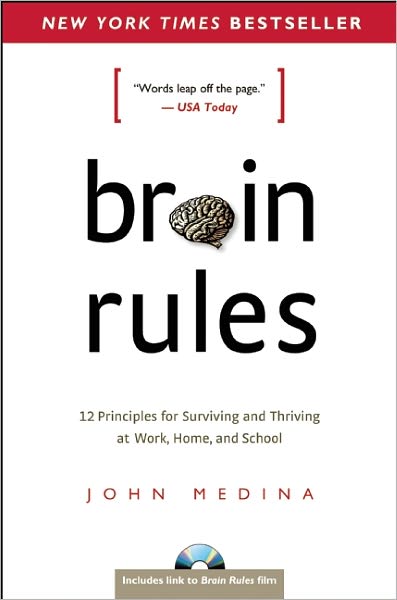
Most of us are well aware that our students all have brains that are wired quite differently. The idea that students all learn the same way and that their brains can take in learning the same way is an assumption of a 20th century factory model of education whose time of demise has come. According to John Medina, in his book Brain Rules: 12 Principles for Surviving and Thriving at Work, Home, and School, here's some things that can be done in our schools to make learning more effective in a classroom of diversely wired brains.
Cover Image
  • Smaller Class Sizes: In spite of the rhetoric in the news about "class sizes don't matter," according to Medina they do matter. He says, "Given every brain is wired differently, being able to read a student's mind is a powerful tool in the hands of a teacher." It's difficult to read student minds when you have 35 to 40 minds as opposed to 20 to 25, or even smaller. Further, Medina states, "Because a teacher can keep track of only so many minds, there must be a limit on the number of students in a class---the smaller the better." If you're churning on test scores alone, maybe class size doesn't matter, but if you're trying to keep up with student minds and differentiating learning, class size does matter.
  • Customized Instruction: The old admonition to create more individualized instruction has a great deal of support in brain research. Medina writes: "You cannot change the fact that the human brain is individually wired. Every student's brain, every employee's brain, every customer's brain is wired differently. That's the Brain Rule. You can either accede to it or ignore it. The current system of education chooses the latter, to our detriment. It needs to be torn down and newly envisioned, in a Manhattan Project -size commitment to individualizing instruction." That settles it, we should strive to individualize instruction for our students rather than engage in trying to standardize it for all students.
It is clear from Medina's work that two things we need to be doing in education are providing smaller class sizes where teachers can "get to know their students' brains" and customize instruction to fit the individual brain wiring our students have. In an era that seeks more and more standardization through testing and common standards, Medina's book makes us wonder whether we are doing the right thing with our current education policy. As usual policymakers engage in reforms that are the opposite of what we should be doing.


Baca Selengkapnya ....

Just How Bad Is the Budget Situation in North Carolina? Video by NC High Students

Posted by Unknown Senin, 21 Maret 2011 0 komentar
I think this video says about all that can be said about both our budget crisis in North Carolina, and the approach our political establishment is taking with budget cuts. This video was created by Career Technical Education students in a multimedia class. It is a very moving tribute to what is currently happening in education in North Carolina.


The Impact of Budget Cuts in Education from WNDR News on Vimeo.

Thank you to the students at AL Brown High School in Kannapolis, North Carolina for reminding us of the importance of education.

Baca Selengkapnya ....

Future Educational Leaders Need Ability to Manage Technology Shifts

Posted by Unknown Kamis, 09 Desember 2010 0 komentar
I stumbled across this post from Matthew Ingram entitled “Future Leaders Will Be Those Who Can Manage Technology Shifts.”

According to Ingram, “The big question for businesses today is how they adapt to (technology progression) and particularly how the leaders of companies handle the implementation of technology inside their organizations, and try to help their employees evolve and succeed. And the leaders of the future will likely be those who are flexible enough to move with those changes, rather than the people who moved up through the ranks the traditional ways.”

Leadership in schools will also require this same ability to adapt and help others adapt to the progression of technology. That means having leaders who embrace technological change rather than trying to keep it outside the building. (Hence my argument regarding Facebook.) If we are going to be educational leaders in this quickly shifting technological landscape, we need to be agile in every way possible.

In the video below, Allen Delattre makes an excellent argument for needing a new kind of business leader able to manage technology shifts. Much of what he says could be applied to educational leadership as well.


Watch live streaming video from gigaomtv at livestream.com
Leadership for Managing Technology Shifts

Baca Selengkapnya ....

TaskTome: Task Management Software for Those Who Want Simple

Posted by Unknown Minggu, 28 Maret 2010 0 komentar

As an administrator, I am always looking for solutions to managing the many tasks that come with being a school principal. During the course of the day, one or two dozen tasks can often come across my desk, and trying to find a way to keep track of all of these is problematic. Of course there are the usual Web 2.0 tools like Google Calendar, Remember the Milk, and Ta-Da Lists. All of the online tools have their positives and negatives, but I am always game for trying new software.

I honestly do not recall when and where I first heard of taskTome, but I do remember reading about it in some open source review. It looked promising so I downloaded a copy from http://tasktome.shanemca.com/. After installing it, I found it really does work as advertised. It basically has five main features:

1. Planner: You can use this feature to keep track of events. It allows you to enter an event, just like many calendar programs, but there is no alarm or reminder feature. The calendar has a very simple interface.

image

taskTome Calendar Interface

2. Tasks Manager: The Tasks interface for taskTome is also simple. It gives the user the ability to create tasks by clicking a single button. These tasks can then be given due dates, placed in a category, and assigned a priority. Again, though, there is no reminder alarm system with the software.

image

taskTome Tasks List Interface

3. Diary Entry: One feature that I found interesting with taskTome was the ability to enter Diary entries. During my tenure as an administrator, I keep a running administrative log that contains notes regarding administrative actions taken and the incidents and situations faced every day while on the job. This feature is a handy one to have for someone who is keeping a daily log of activities for documentation purposes. The only feature I wish was included was a timestamp button so that I could easily enter the time.

image

taskTome Diary Interface

4. Notes Entry: TaskTome also gives users a place to enter notes. This is basically a simple notepad like interface where users can enter information and insert dates and objects into them. Useful for keeping additional notes tied to tasks or events.

image

taskTome Notes Interface

5. Financial Tracking: TaskTome’s financial tracking feature was personally the least useful feature for me. Perhaps that is because so much of the schools expenses are tracked in other ways. Still, it looks simple enough and might prove useful to some.

image

taskTome Financial Interface

TaskTome is a very simple Task tracking program. For the user who really does not need a lot of extra bells and whistles, this program fits the bill. It has the ability export its event list, task list, diary entries, and notes, and will also export these same documents into PDF files. The program is also small enough to install and operate from a flash drive. It truly is a simple task management program.


Baca Selengkapnya ....

How Politics Can Hamper School and Curriculum Reform Efforts

Posted by Unknown Selasa, 16 Februari 2010 0 komentar
If you have been educator for any length of time, you know how difficult it is to get the education system to change. During the nineties, I remember all to well the struggles my high school had when we were trying to switch to block scheduling from the traditional six-period day. It took an entire two years to get the idea finally implemented, because it honestly takes long time to win over students, parents and teachers. One of the obstacles to any change or reform in schools is the common belief out there, that schools "should be just like they were when I attended." Everyone has some kind of idealized picture of how school should be, and attempts to change that picture receive very hostile attention.

A recent illustration of this hostility was North Carolina's attempts to revise the social studies and history curriculum. Basically, the state wanted to spread out the study of history over multiple grades so that students could get a more in-depth look at history and social studies. In a memo June Atkinson, State Superintendent, states that "one of the over-arching goals of the new curriculum standards was to give our students the opportunity to study U.S. history in depth to the present day." Because of this the team that wrote the proposed curriculum so that students would receive multiple opportunities to study U.S. history through reconstruction before they entered high school. In effect, STUDENTS WOULD RECEIVE MORE HISTORY RATHER THAN LESS. This mess all started after FOX news misrepresented the facts, as they so often do. They published a story that stated that "North Carolina Schools May Cut Chunk Out of U.S. History Lessons." The proposal from the North Carolina curriculum team was an attempt to restructure the U.S. History curriculum so that students encountered more of history. Well, after FOX News did its magic, our state education leaders found themselves battling the lies and half-truths spread by a national news network.

To make matters worse, it seems our state politicians are now voicing their concerns. In a letter published here, and written to our state superintendent and State School Board Chairman, one of our state senators, Marc Basnight voices his opposition to any changes in the high school history curriculum. His rationale is simply that only high school students can understand and appreciate our country's history like the Civil War or our country's founding. His suggestion to "offer history as an extracurricular activity outside the school day" demonstrates just how far removed this man is from the realities of the modern school and classroom. I'm sure we would have a million students waiting in line to study history after school! His argument in a nutshell is that "U.S. history must be taught in its entirety during the high school years." No room for experimentation or change. What is really interesting is the veiled threat placed at the end of the letter. "I look forward to working with you as we continue improving education in our state." My personal translation of that is, "Keep you hands off our history curriculum, or I will introduce and get passed a law that mandates that all U.S. History is taught in high school." It does not take a long look at our state's history to see that our legislature has no qualms about meddling in curriculum.

This incident illustrates the same forces at work that are keeping or trying to keep schools from moving into the 21st Century. The tendency to want to keep schools like they were in some earlier ideal time is extremely strong, and it is very difficult to introduce and implement change because of this. Whether it is suggested curriculum change like this one, or some kind of restructuring of the school calendar, politics sometimes dictates that schools should be same as the schools of yesterday.

I suppose the question at this point is, how do we break out of this rut? Usually a crisis of some kind is the easiest way. It took Sputnik and the belief that we were behind in the Space Race to change science and math instruction. Perhaps it is going to take the same kind of crisis, perceived or real, to force us to really and truly rethink our schools. When America is on the brink of becoming a true third world country because of an outdated education system, people might finally wake up and see that the schools they attended were first of all, not all that ideal. The old schools only educated a small number of our citizens. Now we are charged with educating everyone. They will also see that our schools, especially high schools are obsolete. Perhaps the true way we are going to really move our schools into the 21st Century is by attacking head-on this outdated vision of the perfect schools of the past, and replacing that image with what our high schools could really look like. Fellow 21st Century Administrators, that is no small order.

Baca Selengkapnya ....
Trik SEO Terbaru support Online Shop Baju Wanita - Original design by Bamz | Copyright of apk x8.